66KV, 72.5KV Series: SF6 Circuit Breakers for Transmission Substations
The 66KV, 72.5KV Series covers outdoor SF6 circuit breakers designed for fault interruption at the transmission level. Installed in transmission substations and grid interconnection points, this product class protects transmission lines, power transformers, and bus sections from fault currents in regional grid systems. When procuring these circuit breakers across international markets, the evaluation must go beyond rated parameters—certified documentation, mechanism design, and configuration geometry all determine how well the equipment integrates into your substation and satisfies local grid authority requirements.
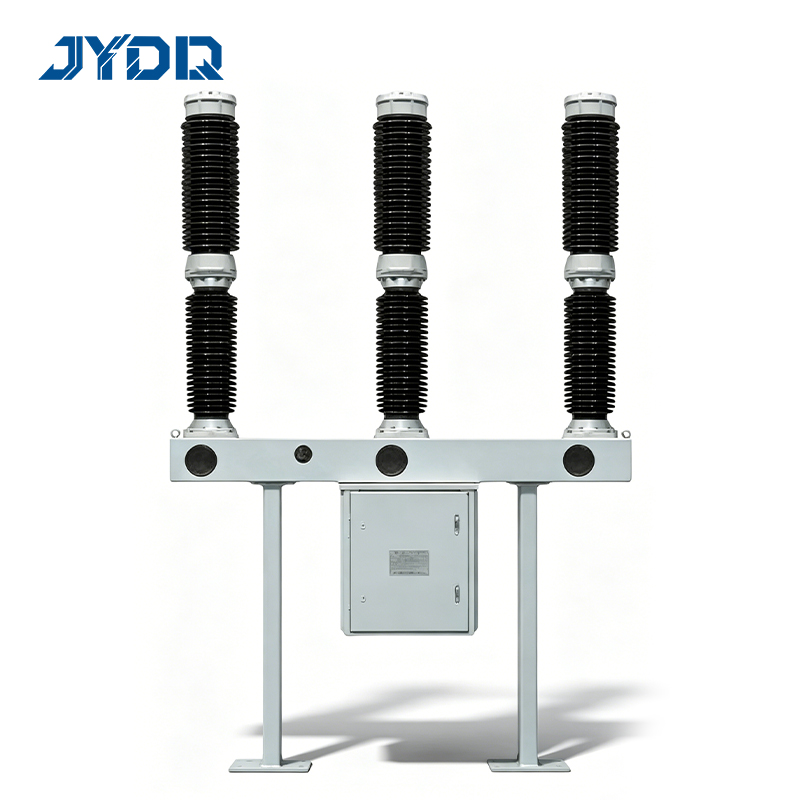
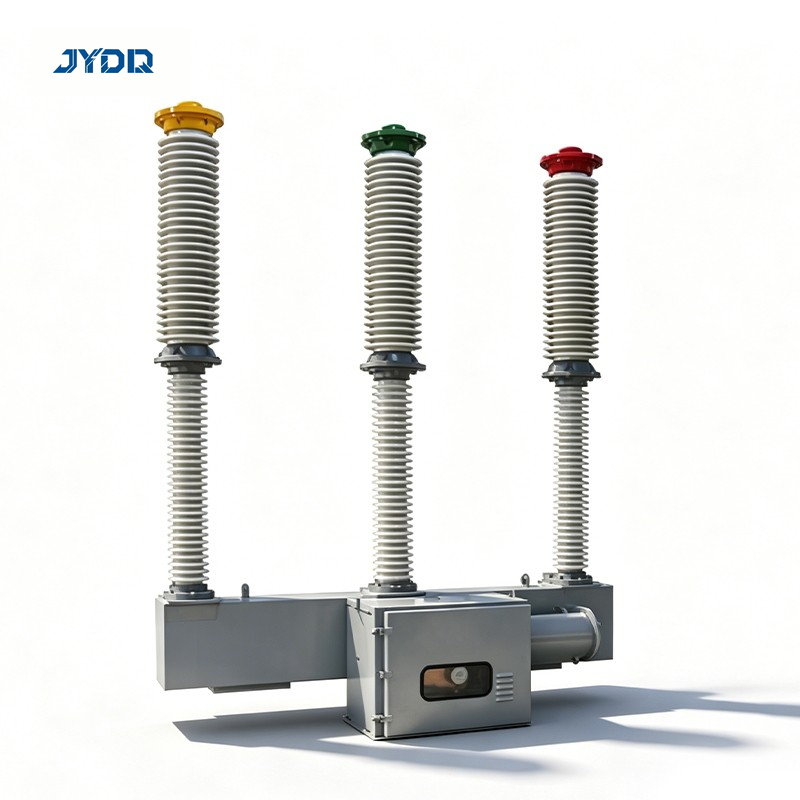
This category offers two LW Series outdoor SF6 configurations from Jingyu Technology: a center-mounted variant with the M2 mechanism and IEC 62271-100 certification, and a side-mounted variant with KEMA-certified type-test documentation. Both carry a rated short-circuit breaking current of 40 kA, CE marking, and a ten-year factory warranty. Understanding which option fits your substation bay geometry and project compliance basis is the starting point for preparing an accurate RFQ specification and transformer quotation package.
Technical Specifications
Voltage class and interrupting rating: Both 66KV, 72.5KV Series configurations are rated for 66 kV and 72.5 kV systems with a 40 kA short-circuit breaking current, positioning the equipment for transmission-level fault interruption in regional grid infrastructure.
SF6 operating mechanism: These circuit breakers use a self-developed SF6 gas-insulated operating mechanism. The center-mounted configuration incorporates the M2 mechanism type, engineered for reliable performance in outdoor transmission substation environments.
Certification basis: The center-mounted configuration is certified to IEC 62271-100. The side-mounted configuration carries KEMA certification—a recognized international third-party type-test authority. Both carry CE marking and type test records are available for key configurations.
Outdoor rating and warranty: Both configurations are designed for outdoor installation across diverse climate conditions, backed by a ten-year factory warranty for capital equipment lifecycle planning.
Applications of 66KV, 72.5KV Series Circuit Breakers
These outdoor SF6 breakers serve transmission-level protection requirements across several infrastructure types:
Regional transmission networks: The 66KV, 72.5KV Series protects high-voltage transmission lines in regional grid substations, isolating faulted sections to prevent outage propagation.
Grid substations at the MV-to-HV interface: At the boundary between medium-voltage distribution and high-voltage transmission, this equipment provides fault isolation at transformer connection points and bus sections.
Overhead line substations with ACSR conductor feeds: In substations connected to ACSR conductor overhead transmission lines, terminal mechanical load specifications require review. The tension and dynamic loading of ACSR conductor spans transfer forces to the circuit breaker bushings, so confirming that the terminal mechanical ratings cover the ACSR conductor system design loads is a necessary specification step.
Renewable energy collection substations: Wind and solar generation projects use this equipment to protect step-up transformer banks and high-voltage grid connection feeders at collection substations.
Industrial HV supply connections: Large industrial facilities with private high-voltage supply connections use outdoor SF6 circuit breakers in this class for grid interface protection and fault isolation.
How to Select the Right Configuration
When evaluating high voltage equipment suppliers for outdoor SF6 breakers in this class, the primary decision is between two configurations that differ in mounting geometry and certification documentation basis.
Center-mounted configuration (M2 mechanism, IEC 62271-100): The M2 design centralizes the operating mechanism relative to the interrupter assembly. This suits substation bay geometries with symmetric pole spacing. The IEC 62271-100 certification basis is the preferred documentation format for projects in European, Asian, and African markets operating under IEC-framework grid codes. If your substation civil design was developed around a center-mounted layout, this variant avoids structural modifications.
Side-mounted configuration (KEMA-certified): The side-mounted design positions the operating mechanism to one side of the interrupter assembly, suiting installations where maintenance access is asymmetric. The KEMA-certified type-test documentation supports projects that require internationally recognized third-party test evidence for grid authority pre-qualification submissions.
It is intuitive to assume that a higher rated voltage class means greater reliability—but reliability is determined by how well the SF6 mechanism design and manufacturing quality align with actual operating conditions, not the rated ceiling alone. For installations in seismic zones, high-ambient-temperature climates, or coastal environments, these site conditions should be reviewed against the product specification with the supplier before finalizing the order.
If your substation bay design includes a metering panel, protection relay assembly, or current transformer bank, confirming the circuit breaker operating mechanism interface specifications and trip coil ratings early in the engineering phase is important. Interface requirements between the circuit breaker and the metering panel wiring design affect both protection panel engineering scope and commissioning timelines. Specifying the metering panel interface requirements in the RFQ alongside the circuit breaker ratings reduces the risk of late-stage engineering changes.
Procurement Guidance for 66KV, 72.5KV Series Buyers
Procurement of the 66KV, 72.5KV Series is typically governed by formal tender and RFQ processes covering design parameters, IEC type-test scope, SF6 gas handling, SCADA interoperability, and commissioning terms. When preparing a combined procurement package that includes a transformer quotation alongside circuit breaker specifications, note that a transformer quotation will reference IEC 60076-series test documentation while these breakers require IEC 62271-100 or equivalent type-test documentation. Aligning format expectations across both equipment types in the RFQ reduces evaluation inconsistencies during multi-supplier comparison.
Procurement teams evaluating competing high voltage equipment suppliers often encounter inconsistent test report formats across candidates. This makes direct technical comparison difficult and increases evaluation time. Requiring all high voltage equipment suppliers to provide documentation against the same specified test clauses and certification format—stated explicitly in the RFQ—is a practical measure to reduce this friction and improve bid evaluation accuracy.
IEC 62271-100 is the primary compliance basis in European, Asian, and African markets. For projects in markets where local grid codes diverge from IEC standards, confirming the applicable compliance framework with the grid authority before finalizing specifications is advisable. Both IEC and local code compliance can be valid starting points, but their testing requirements and documentation formats may differ in ways that affect grid connection approval submissions.

 EN