Current Transformer Series: Overview and Selection Context
The Current Transformer Series offered here covers indoor high-voltage wound-type and SF6 gas-insulated designs rated from 66kV through 220kV. A current transformer series of this class serves as the interface between high primary currents in transmission and distribution substations and the standardized secondary signals required by protection relays, metering instruments, and power measurement systems. Each unit in the Current Transformer Series steps down actual line current—often hundreds or thousands of amperes—to a 1A or 5A secondary output without interrupting the primary circuit, enabling safe and accurate measurement at scale.
When evaluating a current transformer series for cross-border procurement, the decision involves more than matching a voltage class on a datasheet. Verifying insulation type, accuracy class, standard compliance basis, and supplier testing documentation before order placement is the standard approach in utility and EPC contractor procurement. The key parameters—accuracy class, burden, partial discharge level, and insulation voltage—interact in ways that only become apparent when specification is applied to real site conditions.
Product Characteristics and Technical Specifications
This Current Transformer Series includes two distinct insulation types, each suited to different substation environments:
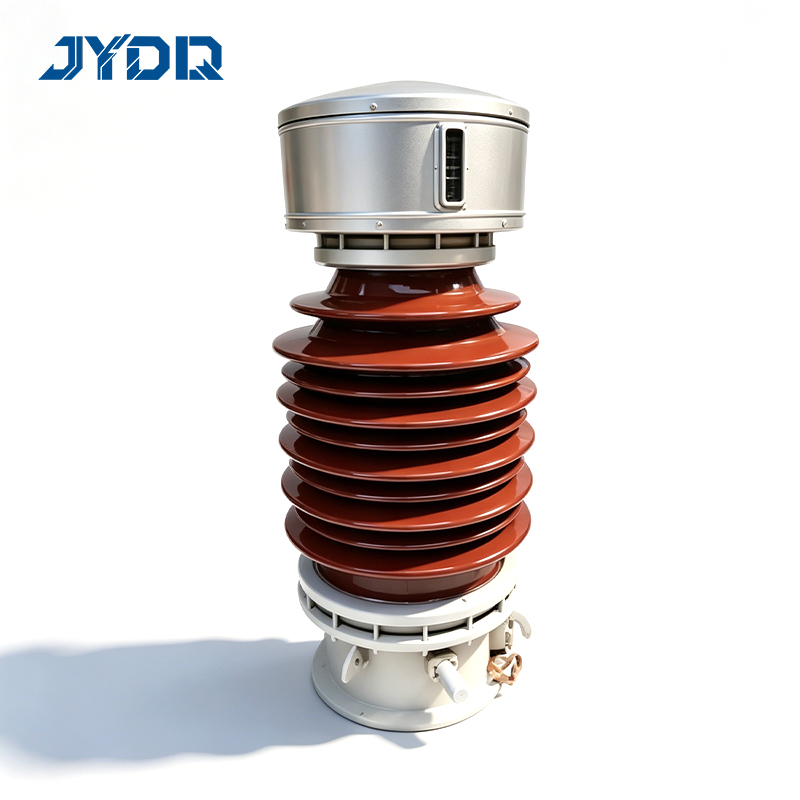
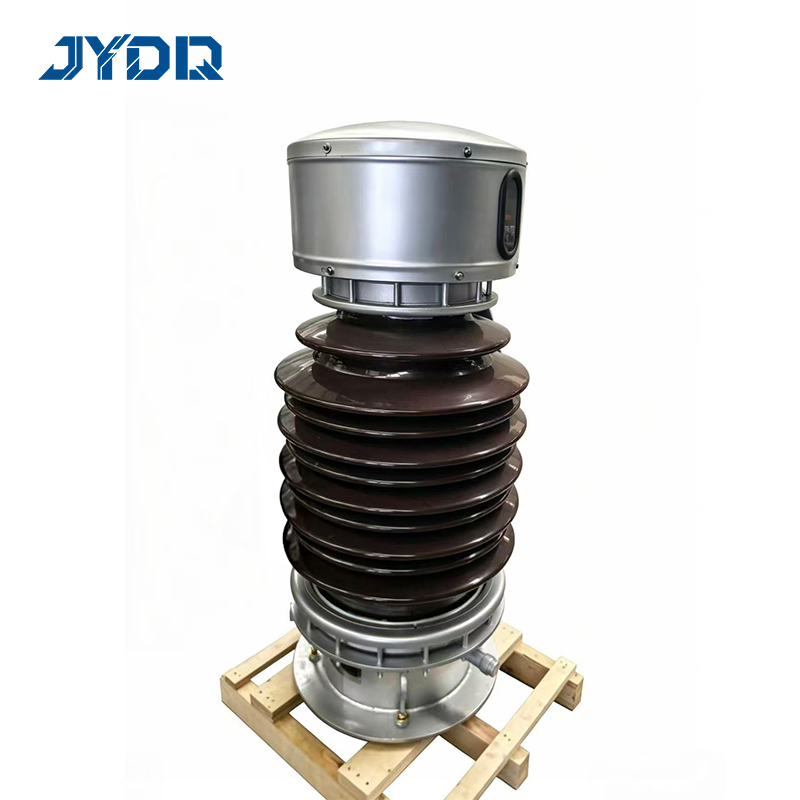
Indoor High-Voltage Wound Type (JDCF/TYD Series): Engineered for 66kV through 220kV indoor substations, these units in the Current Transformer Series feature an integral primary winding and are certified to IEC 61869. The 0.2S accuracy class supports precision revenue metering and is compatible with earth fault relay systems. Voltage classes are customizable across 66kV, 72.5kV, 110kV, 126kV, 145kV, and 220kV to match project requirements.
SF6 Gas-Insulated Type (LB/LCWB Series): These units use sulfur hexafluoride gas as the primary insulating medium, offering high dielectric strength in a compact housing. Certified to both IEC 61869 and GB 20840, partial discharge performance is maintained at ≤5pC—a threshold commonly required in high-reliability utility and transmission substation procurement specifications.
The transformer connection types available within this Current Transformer Series follow two primary configurations: wound type, where the primary winding is integral to the CT design, and toroidal or window type, where the primary bus or cable passes through a central opening without a wound primary. Understanding the applicable transformer connection types for your switchgear bus arrangement is an essential step in the application engineering phase. For indoor high-voltage applications in the 66–220kV range, wound-type transformer connection types are standard, but confirmation with the supplier during the inquiry stage prevents interface mismatches during installation.
For projects in IEC-dominant procurement markets—Europe, Asia, and Africa—both product lines support IEC 61869 as the design and testing basis. This standard governs accuracy requirements, burden ratings, short-time thermal current, and insulation withstand levels verified by grid operators during equipment approval. If the project involves a market with local grid code addenda, whether to prioritize IEC 61869 compliance or a local code variation requires project-by-project review with the relevant grid authority.
Common Applications
This Current Transformer Series is applied across the following infrastructure contexts:
Power transmission substations: Metering energy flows across HV bus sections, transformer feeders, and line bays where accurate current measurement feeds settlement and billing systems.
Protection relay schemes: Providing current inputs to differential protection, overcurrent protection, and earth fault relays that isolate faults and minimize outage scope in HV networks.
Transformer 132kv applications: The transformer 132kv voltage level is a common specification in national grids across South Asia, East Africa, and the Middle East. Wound-type units within this Current Transformer Series are routinely supplied at the transformer 132kv class—typically covered by 126kV rated units under IEC voltage designations—for transmission-level metering and protection.
Gas-insulated switchgear (GIS) integration: SF6-type units from the Current Transformer Series are well matched to GIS environments where compact footprint, sealed insulation, and reduced maintenance access are design constraints.
Renewable energy grid connection: Current transformers at the HV interconnection point of utility-scale solar and wind projects provide the metering and protection interface between the generation plant and the grid.
How to Select the Right Current Transformer
Selecting the right unit within this Current Transformer Series involves a structured evaluation of several interdependent parameters. The decision framework below covers the criteria that most directly affect procurement outcomes for 66–220kV applications.
The short answer on accuracy class is: higher accuracy means tighter tolerance on ratio error and phase displacement. The longer answer is: the accuracy class designation differs between metering and protection circuits under IEC 61869, and the burden requirement in VA differs accordingly. The edge-case answer is: if a metering CT in your switchgear design is also used as a protection input—a configuration that appears in compact substations with shared secondary wiring—a dual-core or multi-ratio unit may be required to meet both functions without compromise.
The shift happens when engineers realize that a unit in the Current Transformer Series is rated for standard ambient conditions, but the actual installation involves an enclosed indoor substation in a tropical climate or a site with elevated pollution levels. That gap between rated specification and real site conditions is where specification decisions need to be resolved before order placement.
Key evaluation criteria:
Voltage class and rated insulation level: Confirm system voltage, maximum continuous operating voltage, and applicable lightning impulse and power-frequency withstand levels. For transformer 132kv system applications, confirm whether 126kV or 132kV is the required rated voltage under the local grid code.
Accuracy class and burden: Specify separately for metering (e.g., 0.2, 0.2S, 0.5) and protection (e.g., 5P, 10P) functions. Confirm burden in VA matches the secondary circuit impedance.
Partial discharge performance: For high-reliability utility applications, verify the PD level in the factory test program. A ≤5pC partial discharge result provides a meaningful quality indicator for insulation integrity beyond standard routine test scope.
Transformer connection types: Review which transformer connection types are compatible with your switchgear primary bus arrangement. Confirming wound-type versus window-type transformer connection types at the RFQ stage prevents installation-phase conflicts.
Standard compliance basis: Confirm whether the project requires IEC 61869, GB 20840, or a local grid code addendum, and verify that the test report provided matches the required standard edition.
If your site has standard indoor ambient conditions and stable grid voltage, the above criteria provide a reliable framework. Once you introduce high-altitude derating requirements, elevated ambient temperature, or grids with voltage variation beyond the standard range, additional application engineering input is warranted before the specification is finalized.
Procurement Considerations for International Buyers
Procuring this Current Transformer Series for international infrastructure projects involves compliance documentation management alongside the technical selection process. In multi-supplier tender evaluations, inconsistent test report formats across candidate suppliers make direct technical comparison time-consuming and increase the risk of selecting on non-comparable documentation rather than verified performance. Specifying the required test report format and test clauses in the RFQ—rather than during post-award review—significantly reduces evaluation effort and procurement risk.
For buyers without dedicated HV engineering resources, supplier-side application engineering support during the specification phase helps translate system requirements into CT parameters and reduces the risk of misspecification or overspecification. This support is most effective when engaged before the RFQ is finalized, as late-stage changes to customized units in the Current Transformer Series carry lead-time and cost implications.
Operational reliability is a baseline requirement in utility and critical facility procurement. Equipment failure in HV substation circuits can cause grid outages or safety incidents with significant downstream consequences. Verifying reliability evidence through factory test reports, type test documentation, and certification records is standard practice in first-order qualification for this equipment class. The relevant instrument transformer standards—IEC 61869 series—define the design, testing, and documentation requirements most utility procurement specifications reference. Confirming the applicable standard edition and the scope of type tests included in the supplier's documentation package is part of the technical qualification process, whether you are procuring for a 66kV distribution substation or a 220kV transmission application.
Units in this Current Transformer Series are supplied to project specifications with customizable voltage class, accuracy class, burden, and primary current ratio. Buyers sourcing for multi-market export projects or EPC contractor procurement requiring grid authority pre-qualification submissions should confirm the compliance documentation scope—including type test reports, routine test reports, and applicable certificates—at the time of inquiry.

 EN