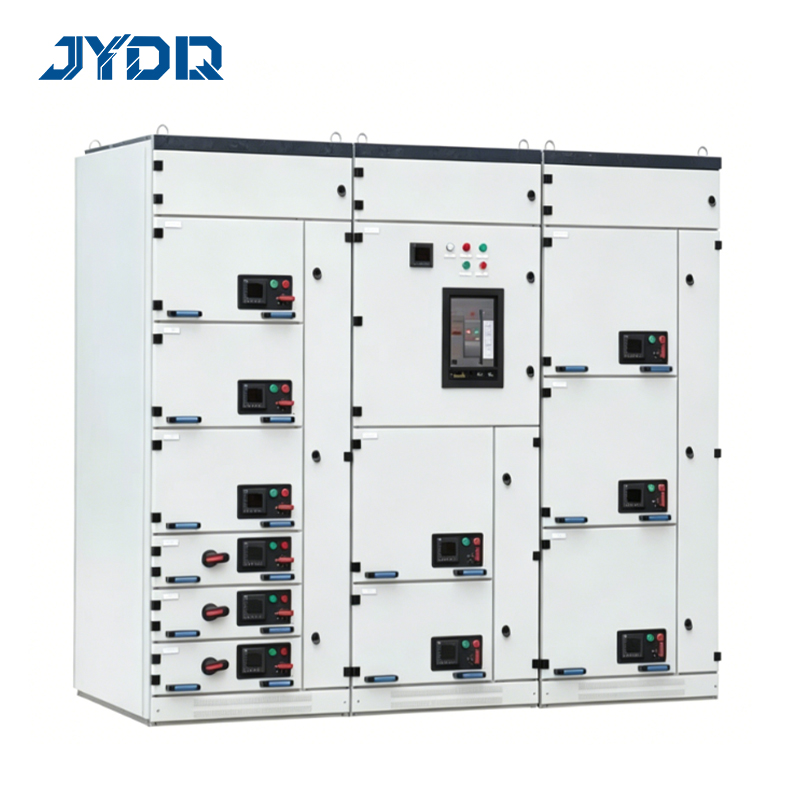
What Is MNS Low-Voltage Switchgear?
MNS Low-Voltage Switchgear is a modular, withdrawable-type low-voltage switchgear and motor control center (MCC) assembly designed for power distribution and control in AC systems operating at rated voltages from 400V to 690V and frequencies of 50Hz or 60Hz. The MNS designation refers to a withdrawable drawer architecture that separates functional units—motor starters, feeder breakers, measuring instruments, and bus sections—into independently accessible compartments within a standardized enclosure frame.
For procurement engineers evaluating low-voltage distribution equipment for cross-border projects, the decision is not just about rated current or breaking capacity on a datasheet. The combination of enclosure structure, busbar system configuration, compartmentalization, short-circuit withstand rating, and compliance documentation determines whether a given assembly will perform reliably in the target installation and pass grid authority review. Understanding what MNS architecture offers—and where standard configurations may need adjustment for your application—is the right starting point for specification.
Key Technical Characteristics
MNS Low-Voltage Switchgear panels in this category are engineered to the following technical parameters:
Rated Voltage: 400V, 415V, or 690V AC, with custom voltage ratings available to meet project-specific grid requirements
Rated Current: Up to 5000A, depending on busbar configuration and enclosure dimensions
Short-Circuit Withstand: Up to 220kA, meeting the high fault-level demands of utility substation and large industrial plant applications
Standard Compliance: IEC 61439 certified, ISO 9001 certified, CE marked for European market requirements
Enclosure Type: Withdrawable drawer configuration with individual compartmentalization, mechanical interlocks, and arc-resistant construction
Configuration: Fully customizable—busbar sizing, functional unit arrangement, metering, protection relay, and cable entry orientation
The distinction between a 220kA short-circuit withstand rating and a lower-rated assembly is not cosmetic. At fault levels typical of industrial park and substation bus sections, a switchgear panel under-specified for short-circuit duty can fail under fault conditions with consequences extending well beyond the panel itself. Verifying that the declared short-circuit withstand is supported by IEC 61439 type test evidence is one of the primary technical review steps before specification approval.
Common Applications
MNS Low-Voltage Switchgear is deployed in a wide range of industrial, commercial, and infrastructure applications where reliable, expandable, and maintainable low-voltage power distribution is required:
Industrial Manufacturing Plants: Main distribution switchboards, motor control centers for large drive applications, and feeder panels for production line circuits
Power Plants and Substations: Auxiliary distribution panels, transformer secondary switchgear, and station service boards
Data Centers: Low-voltage main switchboards for UPS system feeds, generator distribution, and critical load circuits
Commercial Buildings: Main distribution frames for high-rise buildings and mixed-use developments requiring structured cable management and modular expansion
Renewable Energy Projects: Inverter output distribution panels and combiner switchgear for solar and wind generation facilities
Airports and Rail Transit: Station auxiliary distribution, where arc resistance and compartmentalization support maintenance safety requirements
Water Treatment and Mining: Applications requiring high short-circuit withstand capability and motor control integration within a single enclosure
If you are specifying MNS switchgear for a data center application with N+1 redundancy requirements, the incoming section configuration, bus coupler arrangement, and automatic transfer logic will differ from a standard industrial main distribution panel. The right starting point in this scenario is the availability specification and load priority classification—not the current rating alone.
How to Evaluate and Select MNS Low-Voltage Switchgear
Selecting the right MNS switchgear assembly involves more than matching rated current to connected load. The evaluation criteria that experienced procurement engineers prioritize are:
Short-Circuit Withstand and Coordination
Confirm that the declared conditional short-circuit current (Icc) rating matches the prospective fault current at the installation point, with adequate margin. For panels installed close to large transformer secondaries—especially in industrial park and substation environments—220kA withstand ratings may be necessary. Verifying this against the upstream network impedance calculation should be part of the technical acceptance process, not a post-delivery finding.
Standard Compliance and Test Documentation
IEC 61439 is the primary international standard for low-voltage switchgear assemblies and the basis for CE marking in European markets. For EPC contractors managing projects across multiple regulatory frameworks, different grid authorities require different test report formats, and some require locally recognized third-party certification. When evaluating suppliers, confirm whether type test reports are available for the specific configuration being specified. If your project involves markets where the applicable standard framework is unclear, the relevant standard category—such as IEC 61439 for IEC-basis markets or the applicable local grid code—should be confirmed with the supplier and the relevant certification body before specification is finalized.
Customization vs. Standard Configuration
For most standard industrial or commercial applications, a catalog-configuration MNS panel adequately covers requirements with shorter lead times. The evaluation changes when your installation involves non-standard voltage (415V for UK grid systems, 690V for European industrial applications), specific mechanical arrangements, special cable entry provisions, or integrated power quality equipment such as an automatic power factor controller section. At that point, the supplier's customization engineering capability becomes the deciding factor—not the catalog specification alone.
Standard catalog MNS assemblies offer the advantage of shorter lead times and established test documentation, but when your voltage requirement, cable entry layout, or short-circuit withstand specification deviates from standard assumptions, the cost of a misconfigured panel in the field typically exceeds the cost of specifying a modified design upfront.
Expandability and Future Load Planning
MNS withdrawable architecture supports panel expansion through spare functional unit slots without requiring full panel replacement. If your project involves phased load growth—common in industrial parks and commercial developments—confirm that the specified busbar rating and spare slot count can accommodate future additions. If your site has stable load and no planned expansion, this factor carries less weight; once you introduce phased growth or variable peak demand scenarios, spare capacity planning becomes material to the total cost of ownership.
Maintenance Access and Arc Safety
Compartmentalized withdrawable drawer designs reduce the exposure of maintenance personnel to live busbars during routine unit replacement and inspection. Arc-resistant construction options provide additional protection in applications where personnel safety during arc fault events is a procurement specification requirement. The IEC 61439 arc-fault classification for the enclosure should be confirmed against the project electrical safety specification.
Procurement Considerations for International Projects
For procurement engineers managing distribution equipment for projects across multiple markets, MNS Low-Voltage Switchgear procurement involves considerations that go beyond the technical datasheet. Operational reliability is a non-negotiable baseline in utility and critical facility applications—but verifying reliability evidence requires reviewing factory acceptance test documentation and IEC 61439 type test records, not just commercial representations.
International standards divergence is a real procurement variable. IEC 61439-based MNS assemblies are widely accepted across European, Asian, and African markets. For EPC contractors managing projects across multiple regulatory environments, confirming the compliance documentation basis for each target market before committing to a single technical specification avoids late-stage revision costs.
Custom-configured MNS switchgear—such as assemblies combining standard feeder drawers, automatic power factor controller sections, and interface provisions for upstream sf6 insulated switchgear—requires early supplier engagement to align the technical scope before manufacturing begins. Custom manufacturing lead times are typically longer than catalog lead times, and scope changes after production start carry material cost and schedule risk.
In upstream system configurations that include 24kv load break switch panels feeding the 400V–690V low-voltage distribution level, interface coordination between the HV switching equipment and the LV switchgear—including protection relay intertripping, interlocking logic, and bus section arrangement—should be part of the system-level scope definition, not left to installation-phase resolution.
Supplier Qualification Checklist
When qualifying a supplier for MNS Low-Voltage Switchgear, the technical review criteria include:
IEC 61439 type test reports available for the specific enclosure form factor and short-circuit withstand class
Manufacturing capability to produce fully customized configurations—including non-standard voltage, current ratings, functional unit arrangements, and special interface provisions
ISO 9001 certification and quality management traceability for panel assembly and factory acceptance testing
CE certification for markets where EC declaration of conformity is a grid connection requirement
Technical documentation support for project approval submissions and grid authority commissioning
After-sales support capability including warranty coverage, spare parts availability, and commissioning assistance
MNS Low-Voltage Switchgear is a long-life infrastructure asset. Procurement decisions made on the basis of the lowest initial price without adequate evaluation of supplier documentation capability, customization flexibility, and post-delivery support can translate into commissioning delays, compliance rejections, or maintenance gaps that materially exceed the cost savings from the initial selection. Evaluating total lifecycle fit—not just first cost—is the procurement framework that delivers better outcomes in this equipment category.

 EN