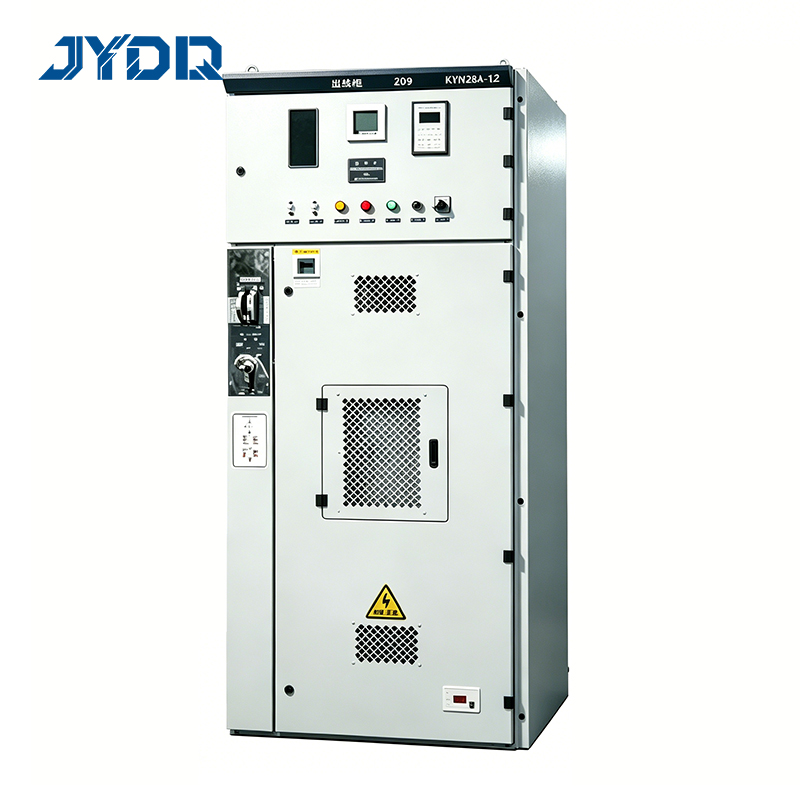
XGN66-12 Switchgear: Category Overview
XGN66-12 is an indoor box-type fixed metal-enclosed switchgear designed for 3.6 to 12kV three-phase AC 50Hz single busbar systems. It serves as the primary switching and protection assembly in power acceptance and distribution networks—handling circuit control, fault interruption, and continuous monitoring functions within a single, space-efficient enclosure. For procurement engineers evaluating medium-voltage distribution equipment for infrastructure projects, understanding how XGN66-12 fits into a broader system context—and what distinguishes it from alternative configurations—is as important as reviewing the rated specifications alone.
Before specifying XGN66-12 switchgear for a project, it is worth confirming which standards—GB3906, DLT404, IEC62271, or applicable local grid codes—govern the installation. The relevant edition, test clause, and market-specific version should be confirmed with the supplier and the relevant grid authority before finalizing the procurement specification.
Key Product Characteristics
Rated voltage: 3.6 kV to 12 kV, suitable for 11 kV and 12 kV distribution systems
Fault breaking capacity: 20 kA to 31.5 kA, supporting a range of short-circuit protection requirements
Protection rating: IP3X, providing solid particle ingress protection for indoor installation environments
Compact enclosure: Fixed metal-enclosed construction typically occupies approximately 50% of the floor space required by conventional open-type switchgear of equivalent capacity
Five-Prevention interlocking: Mechanical and electrical interlock system preventing misoperation sequences—a baseline safety requirement in GB-standard installations and increasingly referenced in international project specifications
Vacuum circuit breaker: Integrated vacuum interruption technology provides high reliability, consistent fault-breaking performance, and reduced maintenance requirements across the rated voltage range
Standards compliance: Designed to meet GB3906, DLT404, and IEC62271 requirements; CE-certified versions available for European and international market applications
Customization capability: Switchgear configurations can be adapted to buyer-provided technical specifications, supporting procurement processes where the buyer controls the technical scope document
A higher voltage class or higher interrupting capacity does not automatically indicate higher reliability for a given application. Reliability in medium-voltage switchgear is determined by how well the design margins, insulation system, and manufacturing quality align with the actual operating environment—ambient temperature, humidity, short-circuit level, and maintenance cycle—rather than by the rated ceiling alone.
Common Applications
XGN66-12 switchgear is specified across a range of industrial and infrastructure applications where indoor medium-voltage switching is required. If your project involves any of the following environments, XGN66-12 represents a viable configuration worth evaluating—though specific requirements may call for additional review of fault levels, protection coordination, and spatial constraints.
Power plants and substations: Primary incoming and sectionalizing switchgear for medium-voltage distribution busbars in generating facility and grid substation environments
Industrial and mining enterprises: Factory and site distribution switchrooms serving motors, transformers, and feeder circuits in demanding operating conditions
High-rise buildings: Indoor medium-voltage switchrooms in commercial towers and mixed-use developments where floor space is constrained and compact footprint is a priority
Ring network cabinets: Loop-feed distribution configurations requiring compact HV switching within limited space, including underground cable ring network substations
Utility distribution substations: Secondary distribution points serving urban and industrial power networks
In markets with variable grid conditions—particularly in Asia, Southeast Asia, and the Middle East—equipment specified for stable-grid parameters may require additional evaluation for transient withstand capability and protection relay coordination. Projects that also involve three phase cast resin transformer banks or 22kv transformer step-down stages should confirm interface voltage compatibility and protection coordination with the XGN66-12 incoming configuration before finalizing the single-line diagram.
How to Choose the Right Configuration
Evaluating XGN66-12 switchgear for a specific project involves more than comparing rated specifications. The following decision dimensions reflect the practical evaluation criteria applied in international procurement for medium-voltage distribution equipment.
Confirm Applicable Standards and Compliance Basis
International technical standards for medium-voltage switchgear diverge between IEC-dominant markets (Europe, Asia, Africa) and IEEE-dominant markets (North America, parts of Latin America). For most XGN66-12 applications, IEC62271-based compliance documentation is the appropriate basis. When projects involve grid authority approval in markets with specific local code requirements, both IEC and the local grid code may apply—and they are not always identical in requirements. When a supplier references IEC62271 compliance, the relevant follow-up questions are: which edition, which test clauses, and whether a third-party type test certificate is available for the specific rated parameters in the tender document.
Evaluate Installation Space and Cable Entry Requirements
Projects that seem straightforward on paper often encounter complications when switchgear arrives and the cable entry configuration does not match the buried conduit layout from civil design—requiring field modifications that affect both cost and schedule. This category of installation-phase delay is disproportionately common in projects where civil engineering and electrical engineering proceed independently, or where equipment dimensions were assessed without accounting for clearance requirements and maintenance access corridors. Before procurement is finalized, confirm cable entry direction, busbar arrangement, arc flash clearance requirements, and minimum maintenance access dimensions around each panel.
Assess Fault Level and Protection Coordination
The rated interrupting capacity of XGN66-12 switchgear (20 to 31.5 kA) must be matched to the actual prospective fault current at the installation point, including contributions from upstream sources or parallel feeders. Systems that incorporate digital monitoring features—such as fiber optic transformer monitoring integrated with medium-voltage switchgear—may affect relay coordination settings and require additional documentation for grid authority approval. Upstream circuit breaker 24kv equipment and downstream protection relay settings should be reviewed in coordination with the switchgear specification to confirm system-level protection coordination.
Review Tender Documentation Requirements
Formal tender and RFQ processes are the primary procurement mechanism for medium-voltage switchgear in utility and public infrastructure applications. Technical specifications in these procurement processes typically cover design requirements, factory acceptance testing, and documentation deliverables in considerable detail. Suppliers who provide specification-level technical documentation—including type test reports, routine test certificates, and installation drawings aligned to the buyer's civil layout—reduce compliance review delays during project execution. If your procurement process requires buyer-controlled specifications to govern the technical scope, confirm early whether the supplier can respond to a buyer-furnished technical specification rather than their standard catalog offering.
Why XGN66-12 Switchgear Matters for Industrial Buyers
You will encounter competing framings when evaluating medium-voltage switchgear: some suppliers emphasize compactness as a cost-saving advantage; others position higher-rated configurations as inherently more robust. Both perspectives are partially valid—but neither is complete without knowing the specific application environment, fault level, protection scheme, and space constraints for the project at hand.
For procurement engineers sourcing XGN66-12 switchgear for projects across multiple markets, the compliance and documentation basis of the product is as important as the equipment rating. A switchgear panel that meets the rated specifications but cannot be supported with verifiable type test documentation, factory acceptance test records, and application engineering support creates downstream risk at the grid authority approval stage. Buyers without in-house HV engineering expertise who rely on supplier guidance to determine appropriate specifications benefit from engaging suppliers who provide pre-sales application review rather than pure catalog selection support.
The customizable XGN66-12 fixed metal-enclosed switchgear available in this category supports 12 kV rated voltage with IEC62271 and GB standard compliance. CE certification is available for European and international market applications. Equipment can be configured to buyer-provided technical specifications, supporting procurement processes governed by buyer-furnished specification documents with a 10-year warranty backing the delivered configuration.

 EN