Selecting the right high-voltage switching technology is critical for electrical engineers and utility managers responsible for grid reliability and equipment longevity. When evaluating medium to high-voltage protection systems, the choice between vacuum circuit breakers and SF6 breakers emerges as a central design decision. Both technologies offer distinct advantages and trade-offs that directly impact operational cost, environmental compliance, maintenance burden, and system performance over decades of service.
This breaker comparison examines the fundamental differences between vacuum and SF6 technologies, helping engineers make informed choices aligned with specific application requirements, budget constraints, and long-term operational strategy. Understanding the nuances of each approach allows organizations to optimize circuit protection architecture and avoid costly retrofits or performance mismatches down the line.
Operating Principles and Arc Extinction Mechanisms
How Vacuum Circuit Breakers Interrupt Current
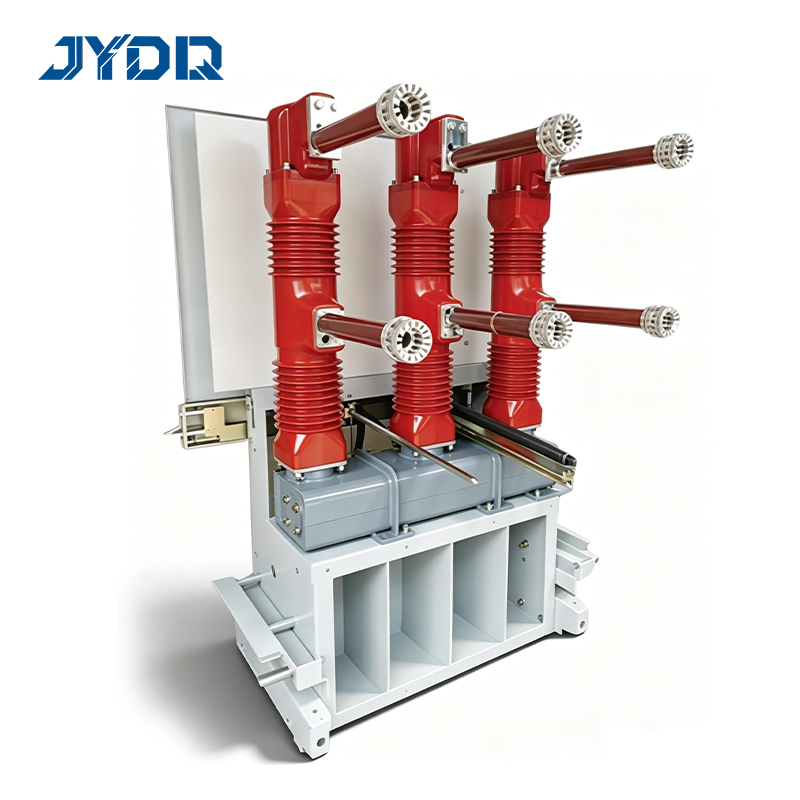
Vacuum circuit breakers utilize a sealed vacuum chamber as the arc extinction medium. When contacts separate inside this airless environment, an electric arc forms briefly between the opening contacts. The vacuum's unique property is that free electrons and ions have extremely short mean free paths, causing the arc to extinguish naturally as the current crosses zero. This mechanism requires no external medium and depends entirely on the vacuum state to suppress reignition. The absence of gas molecules in a vacuum dramatically reduces the energy needed to quench the arc and allows extremely rapid current interruption with minimal wear on contact surfaces.
How SF6 Breakers Interrupt Current
SF6 breakers employ sulfur hexafluoride gas as the arc extinction and insulation medium. When contacts separate, SF6 gas is forced into the arc zone under pressure, cooling the arc and breaking the conducting plasma channel. SF6's superior dielectric strength and thermal conductivity allow it to suppress arcs at higher voltages and in more compact designs compared to vacuum technology. The gas absorbs energy from the arc, dissociates into non-conducting fragments, and recombines after current interruption. This process enables reliable arc extinction across a wide range of fault currents and voltage levels, making SF6 highly effective for transmission-class applications where breaker comparison must account for extreme transient conditions.
Environmental Impact and Regulatory Considerations
Vacuum Breaker Environmental Advantages
Vacuum circuit breakers present a compelling environmental profile because they contain no active medium that requires disposal or replacement. Unlike SF6 systems, vacuum technology generates no greenhouse gas emissions during operation or decommissioning. This makes VCB systems inherently aligned with environmental regulations and corporate sustainability goals without requiring special handling, recapture, or refrigeration. Regulatory bodies worldwide are increasingly tightening controls on SF6 emissions, and many jurisdictions now impose strict caps on SF6 use and mandate leak detection systems. For organizations prioritizing environmental compliance or operating in regions with strict climate regulations, vacuum circuit breakers eliminate this regulatory burden entirely while maintaining technical reliability.
SF6 Breaker Environmental Liabilities
SF6 gas is a potent greenhouse gas with a global warming potential approximately 24,500 times higher than carbon dioxide over a 100-year period. Even small leaks from SF6-filled breakers contribute measurably to atmospheric emissions. Equipment maintenance, venting during servicing, and eventual decommissioning all create pathways for SF6 release into the atmosphere. Many utilities now face regulatory mandates requiring leak detection systems, maintenance protocols, and gas recovery procedures during breaker servicing. The direct and indirect costs of compliance—including specialized equipment, technician training, and documentation—represent significant operational overhead that vacuum technology avoids entirely. A breaker comparison focused on total cost of ownership must factor these regulatory expenses throughout the equipment's service life.
Maintenance Requirements and Service Life Considerations
Vacuum Circuit Breaker Maintenance Profile
Vacuum circuit breakers demand minimal maintenance because the sealed vacuum chamber requires no replenishment, monitoring, or specialized gas handling. Contact wear occurs very slowly in vacuum, allowing VCB systems to achieve extremely high mechanical life ratings—often exceeding 10,000 to 20,000 full-cycle operations. Routine maintenance typically consists of visual inspections, mechanical mechanism checks, and control circuit testing. No gas sampling, purity analysis, or reprocessing is necessary. The simplicity of the maintenance regimen reduces technician training requirements and eliminates the need for specialized gas recovery equipment. Over a 30 to 40-year service life, this straightforward maintenance approach translates into lower total cost of ownership and reduced operational complexity for utility operations teams.
SF6 Breaker Maintenance Demands
SF6 breakers require more intensive maintenance protocols to ensure gas purity and system integrity. Regular SF6 sampling, moisture analysis, and decomposition product testing are essential to verify that the gas remains suitable for reliable arc extinction. Any moisture contamination or chemical breakdown of SF6 significantly degrades dielectric performance and arc-quenching capability. Maintenance personnel must employ specialized equipment to extract, test, and restore SF6 gas without atmospheric venting. Some utilities rotate SF6 gas through recondition facilities periodically, adding material cost and logistics complexity. The breaker comparison reveals that SF6 systems typically require trained technicians with certification in high-voltage gas handling, increasing labor overhead and scheduling constraints. While modern SF6 breakers are robust, the regulatory and technical maintenance demands significantly exceed those of vacuum technology.
Application Scope and Voltage Ratings
Vacuum Breaker Application Limits
Vacuum circuit breakers excel in distribution and sub-transmission voltage classes, typically from 6 kV to approximately 38 kV in standard designs. Most commercial VCB products are rated for voltages up to 35 or 40 kV, making them ideal for utility substations, industrial power distribution, and renewable energy collection systems. Above 40 kV, vacuum technology becomes progressively more challenging because the vacuum chamber must become larger to accommodate the increased voltage stress, driving up physical size and manufacturing complexity. However, ongoing research continues to extend VCB capabilities into higher voltage ranges. For many industrial and municipal applications operating below 40 kV, vacuum circuit breakers provide the optimal balance of performance, simplicity, and cost, making them the default choice in a breaker comparison for these voltage classes.
SF6 Breaker Application Advantages
SF6 technology dominates transmission-class applications and ultra-high-voltage systems operating at 69 kV, 138 kV, 230 kV, 345 kV, and beyond. SF6's superior dielectric strength allows breakers to be physically compact even at the highest voltages, reducing substation real estate requirements and installation costs. The gas's thermal properties enable rapid arc extinction even during severe three-phase faults with extremely high transient currents. A breaker comparison at transmission voltages invariably reveals that SF6 remains the industry standard because no practical alternative yet matches its performance at these extreme operating conditions. For utilities managing interconnected transmission networks, SF6 breakers provide the reliability margin and compact design that modern grid architecture demands. The voltage frontier between practical VCB and necessary SF6 continues to shift as VCB technology matures, but transmission applications remain solidly SF6 territory.
FAQ
What are the primary advantages of vacuum circuit breakers over SF6 technology?
Vacuum circuit breakers offer zero greenhouse gas emissions, minimal maintenance requirements, longer contact life, and complete elimination of regulatory compliance overhead related to gas handling. VCB systems are self-contained and require no gas purity monitoring, leak detection, or specialized disposal procedures. For utilities and industries focused on sustainability and operational simplicity, vacuum technology provides measurable advantages over SF6 in distribution-voltage applications. The straightforward maintenance profile and predictable service life make vacuum breakers particularly attractive for resource-constrained organizations or regions with strict environmental regulations.
Why do transmission utilities still prefer SF6 breakers in high-voltage systems?
SF6 gas provides superior dielectric strength and arc-quenching performance at extreme voltages and fault currents that vacuum technology cannot yet reliably handle. Transmission-class breakers must interrupt faults exceeding 60,000 amperes at voltages of 230 kV and higher, and SF6's proven track record and physical compactness make it indispensable for grid stability. A breaker comparison at transmission voltages shows that SF6 remains the only commercially mature technology offering the required safety margin and performance consistency. As VCB research advances, this boundary may eventually shift, but current transmission infrastructure is fundamentally dependent on SF6 capabilities.
How do lifecycle costs compare between vacuum and SF6 circuit breakers?
Total cost of ownership depends significantly on voltage class, expected fault frequency, regulatory environment, and local labor rates. In distribution systems below 40 kV, vacuum circuit breakers typically offer lower total lifecycle cost because maintenance expenses, gas handling overhead, and regulatory compliance charges are eliminated. In transmission applications, SF6 breakers may show lower capital cost per unit because compact designs reduce substation footprint and installation complexity, but this advantage erodes when regulatory compliance, specialized maintenance, and eventual decommissioning costs are fully accounted for. A comprehensive breaker comparison should model the specific utility's operational profile, regional regulations, and long-term capital strategy rather than relying on simple initial purchase price comparisons.

 EN